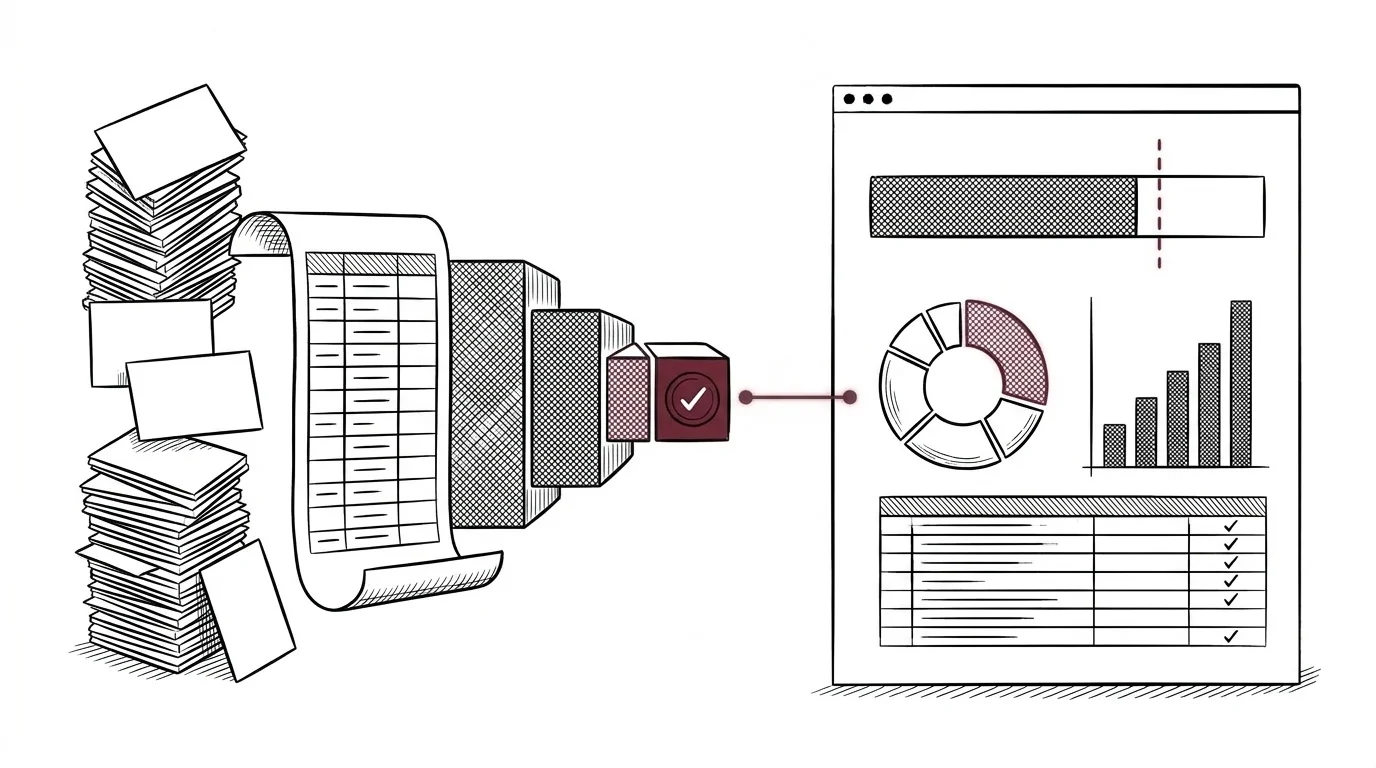
A fundraise has every part of a sales pipeline: a long list of investors, a few stages (intro, partner meeting, diligence, term sheet), amounts each one hinted at, and a target to hit before the money runs out. What it rarely has is the discipline founders bring to sales. It lives in a spreadsheet or a notes app, the amounts are whatever was said on the last call, and “how much is committed?” is a guess that changes with your mood.
“I’ve tried a variety of tools to track fundraising relationships and to manage the process like a true sales funnel. Somehow I always go back to my basic Google spreadsheet and email lists.” (a Y Combinator (YC) founder on the private YC forum)
Another founder in the same thread “ended up talking to around 100 investors before closing our round”, tracked in tabs of a Google Sheet. If the round runs long, the runway runs out with it.
What goes wrong
- Soft commitments get counted as money. “We’re in for $250k” on a call is not a signed SAFE. A list that adds them up overstates the round.
- The stage is not the probability. Ten investors in diligence are not ten term sheets. Without weights, a full list feels like progress.
- The deadline is implicit. The round has to close before runway does, but the list has no date on it.
- The result lives somewhere else. Once the agreements are signed, the investments land in the cap table and the books, and the list is never updated.
Where I tracked it
Right after Y Combinator, fundraising was one of the first things I used HubSpot for, alongside go-to-market and partnerships. Treating the round as a pipeline was the right instinct. The weak spot was that the CRM never knew what was actually signed.
 Pelle BrændgaardFounder, Economico
The round as a pipeline with a target
- Define the stages you actually use. Intro, partner meeting, diligence, term sheet, with a default weight on each.
- One pursuit per investor, with the amount they indicated and when they expect to decide. The same firm can be pursued as an investor and as a customer at the same time without either label leaking into the other.
- Won means the agreement is accepted. An investor counts when their SAFE or other agreement is signed and recorded, not when they say yes.
- A target with a date. “At least $1.5M committed by March 31”, held by the round’s pipeline, read from won pursuits, with the weighted open amount beside it.
Then the honest question has an answer: how much is signed, how much is weighted, and how far is that from the number.
How it looks with an agent
In Economico (the underlying business data model your own agents run, rather than another standalone tracker), your agent defines the round as a pipeline (the built-in financing pipeline or one you name), opens a pursuit per investor from your notes or inbox, moves them as meetings happen, and records the target against the won-value measure from the Economico skill. Amounts and weights stay estimates: they never post to your real accrual books. A SAFE is recorded as a contract, so accepting it wins that investor’s pursuit, posts the investment and updates the cap table in the same step.
- Intro 10% 2 investors, $400,000
- Partner meeting 30% 2 investors, $500,000
- Diligence 50% 1 investor, $500,000
- Term sheet 80% 1 investor, $250,000
- Actual, from the books
- $500,000
- Weighted open, not counted
- $640,000
In progress. Not covered: $360,000 short even if every weight holds.
 Your agent × Economico
Called 2 Economico tools
Economico
targets · read
✓
Seed round committed, held by the seed pipeline: in progress
Economico
reports · pipeline
✓
Open investors by stage, with weighted totalsTry it
Prompts for your round
Create a seed round pipeline with intro, partner meeting, diligence and term sheet. Add the investors from this list with what each indicated.
Propose a target of at least $1.5M committed by March 31, held by the seed round pipeline.
Which investors have been in diligence longest, and who has no decision date?