 Economico
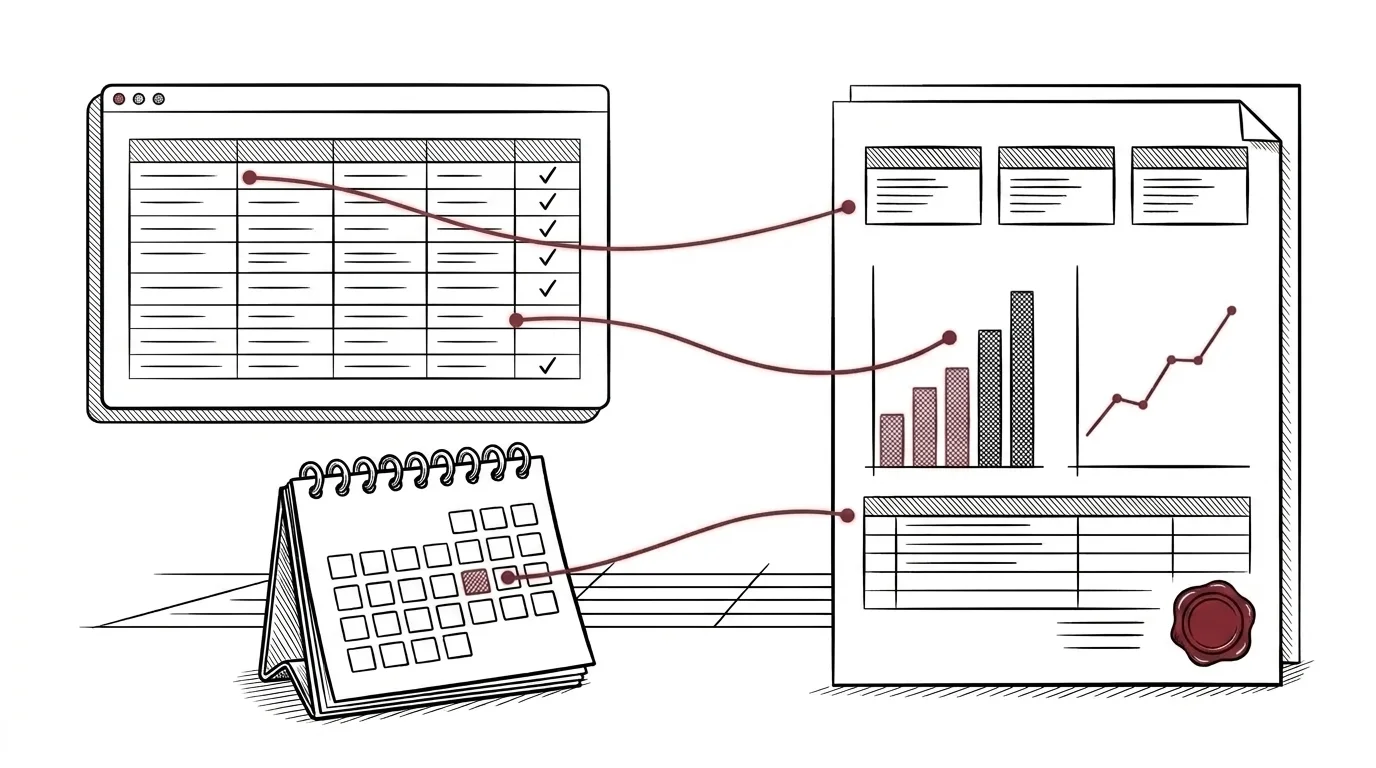
At my last company we had a VP of finance, two more finance people and an outside bookkeeper. And still, the night before most board meetings looked the same. Someone exported from the billing system, someone else from the accounting package, a spreadsheet got rebuilt, and I was typically presented with results two hours before I had to present them.
I said at the time that unless I got some tools, I would build my own, because I could not keep operating blindly. This piece is about what those tools should actually be. Not a faster spreadsheet. A board pack you build once and keep.
Why does the board pack get rebuilt every month?
Because it never lives anywhere. The numbers come out of four systems, get combined in a spreadsheet, get pasted into a deck or an email, and the spreadsheet is quietly abandoned. Next month someone starts again from the exports.
Each rebuild is a chance for a definition to drift. Was that recurring revenue at month end or the average? Did we count the customer who signed on the 30th? Nobody can tell you, because the logic behind last month’s number is in a file nobody can find.
The board already told you what to build
Here is the thing I only saw in hindsight. My board asked for the same handful of cuts, in nearly the same words, for years:
| What the board asked | How it was first said |
|---|---|
| Where growth comes from | “separate where’s the growth coming from, existing customers versus new ones” |
| Recurring margin, not blended | “you don’t want to have blended” |
| A headcount tally | “it would be good to have a headcount tally” |
| A quick flash, not a polished pack | “the board should have a flash of what did those numbers look like” |
We built those cuts once, under pressure, for a data room during a raise. They were good enough to send and never good enough to manage by, because they did not exist the month before or the month after.
The lesson I took away is simple: build it for management and diligence comes free. Build it for diligence and you get neither.
A number you send is a commitment
There is a second reason to keep the pack, and it hurts more.
Once, a valuation firm read revenue we had guided them towards as revenue we had actually earned. Nobody lied. But the number had left the building without a label, and the cost landed on everyone holding options.
Booked, recognised, forecast and collected are four different numbers. The one you send outside should say which it is. And when someone asks about it three months later, you should be able to see exactly what you sent, not what the books say today.
What the pack looks like as a report
In Economico your agent can build all of this as one custom report over your own books. A report is a set of blocks (figures, tables, bar and line charts, and text) with a setting, usually the month, that you change on the page.
This matters more than it sounds. Every board-pack template I have seen assumes the same business: a SaaS company with seats and a monthly plan. The accounting tools under them, QuickBooks and Xero, were built around another template again: a workshop, a shop or a small consulting firm. Real businesses are far more specific. Maybe you bill a retainer plus usage, pass costs through to customers, or get paid partly in stablecoins. A template either flattens that or leaves it out. A report your agent builds reads your own contracts, accounts and customers, so it can show the business you actually run.
Here is the shape I would start with, then make it yours:
| Block | What it reads | Caption under it |
|---|---|---|
| Headline figures | Recurring revenue, cash, net burn and runway for the chosen month | “as the SaaS metrics report states them” |
| Recurring revenue, twelve months | A line chart over the same figures by month | “recurring revenue in force at month end” |
| Where growth came from | Revenue by month, split between customers who started this year and everyone else | “recognised revenue” |
| What we spend on | Spend by vendor or category for the month, against the same month last year | “booked” |
| What we are owed | Open invoices by customer | “still open today” |
| The month in words | Your own text: what happened, what worried you, what you want from the board |
The headline figures come from the same code as the built-in SaaS metrics report, so your pack never disagrees with what your agent tells you in chat. The captions are the labels my valuation story was missing.
If you record payroll in Economico, a headcount block (people and cost by month) is one more query. If you don’t, leave it out rather than paste it in.
How do you ask for it?
You don’t write the queries. Your agent reads the schema of your books and writes them. Something like:
Build me a monthly board report as a custom report. Headline figures for the chosen month: recurring revenue, cash, net burn and runway. A twelve-month recurring revenue chart. Revenue split between customers who started this year and everyone else. Spend by vendor against the same month last year. Open invoices by customer. Leave a text block for my notes. Caption every block with whether it is booked, recognised or open. Add a month setting that defaults to last month. Check it and show me a preview before you save it.
Your agent checks the definition and draws a preview first, so its attempts leave nothing behind in your books. When you’re happy, it saves it. Changing it later makes a new version; the old one stays exactly as it was.
Pin it to your workspace overview and it is the first thing you and your co-founder see.
You don’t have to look at it in Economico at all. Your agent gets the same exact figures from your books, so it can also draw them in its own charts, artifacts or dashboards. The pack you keep in Economico and the dashboard your agent drew agree, because they read the same books.
Send it frozen, keep it answerable
Each month, have your agent send the report as a link for that month. You choose how it behaves:
| Frozen link | Live link | |
|---|---|---|
| What the reader sees | Exactly what you sent, for the month you chose | Your books as they are when the page opens |
| Can the reader change the month? | No | Yes, within the bounds the report sets |
| Best for | The monthly investor update, the board pack, a data room | A co-founder, an advisor you trust with today’s numbers |
Frozen is the default, and it is the one I care about. When an investor asks in March about a figure in your December update, you open the December link and see what they saw. Links need no sign-in, you get a notice when one is made, and you can end access at any time. Links are on the Founders and Startup plans.
What it does not do for you
I’m honest about the edges, because a board pack with a wrong number in it is worse than no pack.
- It does not write the story. The text block is yours. The board wants to know what you think, not just what happened.
- It reads what you recorded. If a contract or a bill is missing from your books, it is missing from the pack.
- Margin per customer is revenue only. Costs are not attributed to each customer yet, so recurring gross margin by customer is not something to promise your board today.
- No forecasts or bear cases in the report. It shows recorded history. Scenarios are coming; until then, label any forecast you add by hand as a forecast.
The night before the next board meeting
Next time, the pack already exists. You change the month, read it, write three paragraphs about what it means, and send a frozen link. That is the whole job.
If you want the cuts that help you run the company between board meetings, not just report it, read The metric you report is not the metric you manage by.
The pack is readable because Economico is not another reporting tool bolted onto accounting software. It is the business context layer and underlying data model your own agents run, tying contracts, invoices, revenue recognition, pipelines and targets onto real accrual books. Build it from investor reporting and send a frozen share link.
If you want the pack to read from one record, start by recording a recent bill or receipt. Connect an agent you already use (Claude, ChatGPT, Codex, Grok Bot, Gemini or Antigravity), or start with the ChatGPT setup.